 By admin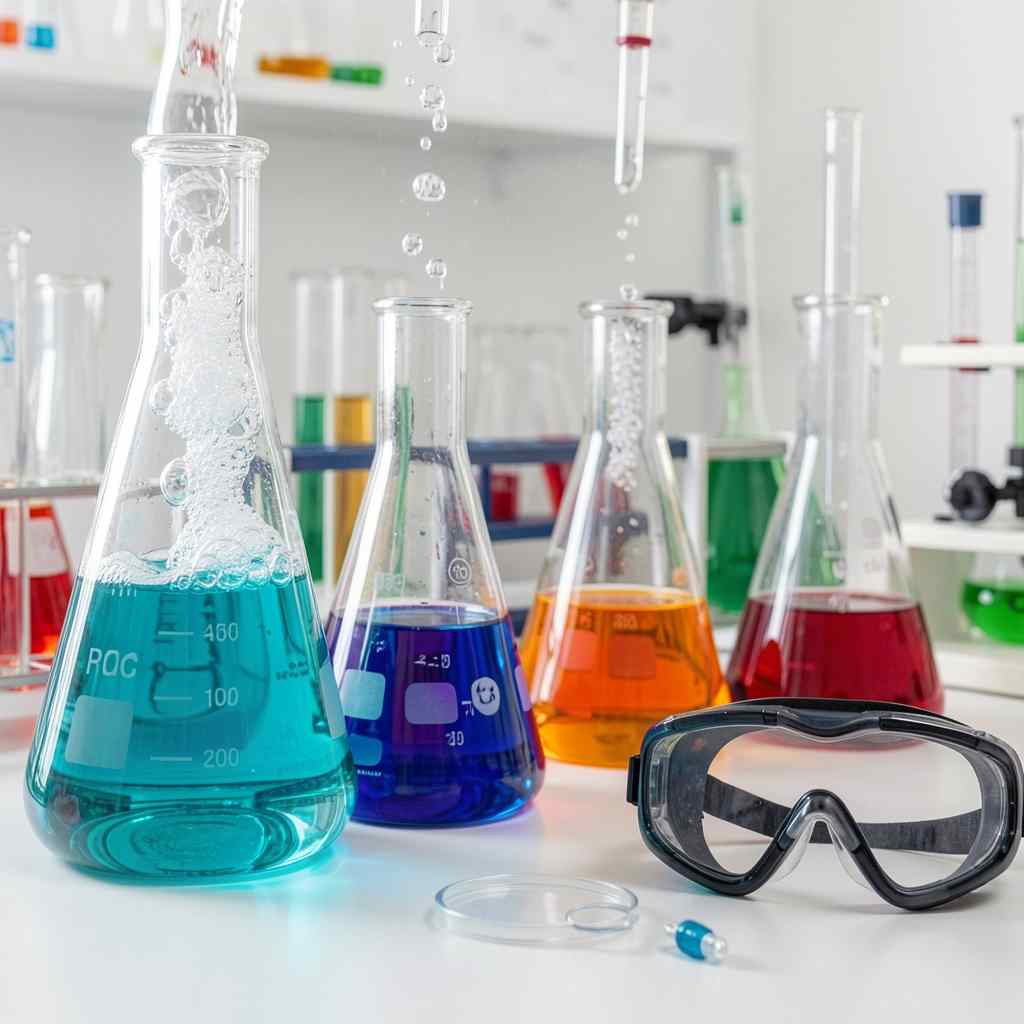
Chemistry experiments are practical activities that allow people to observe and understand how substances interact with one another. They are one of the most effective ways to learn scientific concepts because they transform theories and formulas into visible, real-world reactions. Whether conducted in a laboratory, classroom, or home environment, chemistry experiments help learners develop a deeper understanding of the world around them.
In this guide, you will learn essential safety rules, discover beginner-friendly chemistry experiments, understand the science behind common reactions, and explore ways to advance your chemistry skills. Whether you are a student, teacher, parent, or science enthusiast, this guide will help you begin your chemistry journey with confidence.
What Is Chemistry Experiments?
Chemistry is often called the central science because it connects physics, biology, environmental science, medicine, and engineering. Through experiments, beginners can explore the behavior of matter, discover how chemical reactions occur, and learn why different substances react in unique ways.
Chemistry experiments involve the systematic observation of matter, focusing on its properties, composition, and the changes it undergoes through chemical reactions. You can explore fundamental scientific principles—such as thermodynamics, states of matter, and reaction kinetics—using common household ingredients or standard laboratory equipment.
Hands-on learning offers several advantages over simply reading textbooks. Experiments engage multiple senses, making scientific concepts easier to understand and remember. When learners see bubbles forming, colors changing, or crystals growing, they gain firsthand experience with chemical processes that might otherwise seem abstract.
Chemistry experiments cover a wide range of topics, including acids and bases, chemical reactions, density, crystallization, oxidation, and energy changes. Even simple experiments using household ingredients can demonstrate important scientific principles.
Essential Safety Rules Before Starting Chemistry Experiments
Safety should always be the first priority when performing chemistry experiments. Even simple activities can involve substances that require careful handling. Understanding and following basic safety rules helps prevent accidents and creates a positive learning environment.
Importance of Laboratory Safety for Beginners
Many chemicals can cause irritation, burns, or harmful reactions if used incorrectly. Proper safety procedures reduce risks and ensure experiments are conducted responsibly. Developing good safety habits early also prepares learners for more advanced scientific work in the future.
Safety is not just about protecting yourself. It also involves protecting others, preserving equipment, and maintaining a clean workspace. Following safety guidelines allows everyone involved to focus on learning and discovery.
Basic Safety Equipment and Protective Gear
Before starting any experiment, gather appropriate safety equipment. Essential protective gear includes:
- Safety goggles to protect the eyes
- Gloves to prevent skin contact with chemicals
- Lab coat or apron to protect clothing
- Closed-toe shoes for foot protection
- Face mask when working with powders or strong odors
Even when using household materials, wearing basic protective equipment is a good habit that reinforces safe scientific practices.
Safe Handling of Chemicals and Household Materials
Many beginner experiments use common substances such as vinegar, baking soda, salt, sugar, and food coloring. While these materials are generally safe, they should still be handled carefully.
Always read instructions before beginning an experiment. Avoid tasting chemicals or experimental materials. Never mix substances unless instructed to do so. Use measuring tools properly and store chemicals in labeled containers.
Wash your hands thoroughly after completing experiments, even if gloves were worn. Clean equipment and surfaces to prevent contamination.
Common Mistakes to Avoid During Experiments
Beginners often make mistakes that can affect both safety and results. Common errors include:
- Skipping safety equipment
- Using incorrect measurements
- Mixing unknown substances
- Working in cluttered spaces
- Ignoring instructions
- Failing to record observations
Avoiding these mistakes improves both safety and learning outcomes.
Creating a Safe Workspace at Home or School
Choose a clean, well-ventilated area with good lighting. Keep food and drinks away from the workspace. Ensure that water is available for cleanup and emergencies.
Store materials neatly and keep emergency contact information accessible. Adult supervision is recommended for younger learners, especially when experiments involve heat, glassware, or chemical reactions.
A well-organized workspace reduces distractions and allows experiments to be conducted efficiently and safely.
Easy Chemistry Experiments Every Beginner Should Try
One of the best ways to learn chemistry is through simple experiments that demonstrate important scientific concepts. The following activities are beginner-friendly, educational, and enjoyable.
Volcano Reaction Using Baking Soda and Vinegar
The baking soda volcano is one of the most famous chemistry experiments. It demonstrates a chemical reaction between an acid and a base.
Materials
- Baking soda
- Vinegar
- Food coloring (optional)
- Small container or bottle
- Tray
Procedure
- Place the container on a tray.
- Add a few spoonfuls of baking soda.
- Add food coloring if desired.
- Pour vinegar into the container.
- Observe the reaction.
What Happens?
The mixture produces carbon dioxide gas, creating bubbles and foam that resemble a volcanic eruption.
Scientific Principle
Baking soda is a base, while vinegar is an acid. When they react, carbon dioxide gas forms, creating the visible eruption.
Invisible Ink and Simple Chemical Changes
Invisible ink experiments demonstrate how chemical changes can reveal hidden messages.
Materials
- Lemon juice
- Cotton swab
- White paper
- Lamp or iron (with supervision)
Procedure
- Dip the cotton swab into lemon juice.
- Write a message on paper.
- Allow it to dry completely.
- Carefully apply heat to reveal the message.
What Happens?
The invisible writing becomes visible when heated.
Scientific Principle
Heat causes compounds in the lemon juice to oxidize more quickly, producing a brown color that reveals the message.
Color-Changing Acid-Base Indicator Experiments
This experiment uses natural indicators to identify acidic and basic substances.
Materials
- Red cabbage
- Water
- Blender
- Various household liquids
Procedure
- Blend cabbage with water.
- Strain the liquid.
- Pour indicator into several cups.
- Add different household liquids.
What Happens?
The indicator changes color depending on the pH of each substance.
Scientific Principle
Natural pigments in red cabbage respond to changes in acidity and alkalinity, producing different colors.
Crystal-Growing Experiments for Beginners
Crystal growth experiments demonstrate how dissolved substances form organized structures.
Materials
- Salt or sugar
- Warm water
- Jar
- String
Procedure
- Dissolve salt or sugar in warm water.
- Pour the solution into a jar.
- Suspend a string in the solution.
- Leave undisturbed for several days.
What Happens?
Crystals gradually form on the string.
Scientific Principle
As water evaporates, dissolved particles arrange themselves into repeating patterns, creating crystals.
Density and Liquid-Layering Demonstrations
Density experiments illustrate how substances with different masses occupy space differently.
Materials
- Honey
- Dish soap
- Water
- Vegetable oil
- Food coloring
Procedure
- Slowly pour liquids into a clear container.
- Add each liquid carefully to prevent mixing.
- Observe the layers.
What Happens?
The liquids separate into distinct layers.
Scientific Principle
Each liquid has a different density, causing heavier liquids to sink while lighter liquids remain on top.
Key Scientific Principles Behind These Experiments
These activities introduce fundamental chemistry concepts, including:
- Chemical reactions
- Acids and bases
- Oxidation
- Crystallization
- Density
- Gas formation
Understanding these principles provides a foundation for more advanced scientific learning.
Understanding the Science Behind Chemistry Experiments
Performing experiments is valuable, but understanding why reactions occur is equally important. Chemistry experiments help reveal the behavior of matter and energy.
Physical vs. Chemical Changes
One of the first concepts beginners learn is the difference between physical and chemical changes.
A physical change alters a substance’s appearance without changing its identity. Examples include:
- Melting ice
- Boiling water
- Cutting paper
A chemical change creates new substances with different properties. Examples include:
- Burning wood
- Rusting metal
- Baking a cake
Many chemistry experiments involve chemical changes because they produce visible evidence such as gas, heat, color changes, or precipitates.
Acids, Bases, and pH Explained Simply
Acids and bases are important categories of chemical substances.
Common acids include:
- Vinegar
- Lemon juice
- Soft drinks
Common bases include:
- Baking soda
- Soap
- Ammonia solutions
The pH scale measures acidity and alkalinity from 0 to 14.
- pH below 7 = Acidic
- pH 7 = Neutral
- pH above 7 = Basic
Understanding pH helps explain many everyday chemical reactions and environmental processes.
Introduction to Chemical Reactions and Equations
A chemical reaction occurs when substances interact and form new products.
Chemical equations represent reactions using symbols and formulas. For example:
Reactants → Products
Although beginners do not need advanced chemistry knowledge immediately, understanding that reactants transform into products provides a useful framework for interpreting experimental results.
Observing Reactions Through Color, Temperature, and Gas Changes
Scientists often identify chemical reactions through observable evidence.
Common indicators include:
Color Changes
A substance may change color when a reaction occurs.
Temperature Changes
Some reactions release heat, while others absorb it.
Gas Production
Bubbles often indicate the formation of gases.
Formation of Solids
New solid materials may appear when solutions react.
Careful observation helps scientists gather evidence and draw conclusions.
How Experiments Connect to Real-World Chemistry
Chemistry experiments are more than educational activities. They illustrate processes that occur every day.
Examples include:
- Cooking food through chemical reactions
- Cleaning products removing stains
- Medicines interacting within the body
- Batteries generating electricity
- Environmental processes affecting ecosystems
By understanding chemistry, learners gain valuable insights into how the world functions.
Advancing Your Skills and Exploring More Chemistry Experiments
Once you become comfortable with beginner experiments, you can expand your knowledge and tackle more challenging projects.
Building a Beginner-Friendly Chemistry Toolkit
A basic toolkit makes experimentation easier and more organized.
Useful items include:
- Measuring cups
- Beakers
- Test tubes
- Pipettes
- Safety goggles
- Digital scale
- Thermometer
- Notebook
Quality tools improve accuracy and encourage scientific thinking.
Recording Observations and Analyzing Results
Professional scientists carefully document every experiment. Beginners should develop the same habit.
Record information such as:
- Date and time
- Materials used
- Procedure
- Observations
- Results
- Conclusions
Keeping detailed notes helps identify patterns and improve future experiments.
Recommended Intermediate Experiments to Try Next
As your confidence grows, consider exploring more advanced topics.
Examples include:
- Electrolysis of water
- Chromatography experiments
- Reaction rate investigations
- Polymer creation
- Metal corrosion studies
- Homemade pH testing kits
These experiments introduce deeper concepts while strengthening laboratory skills.
Educational Resources for Learning Chemistry
Many resources can support continued learning.
Consider exploring:
- Chemistry textbooks
- Educational websites
- Science museums
- Online chemistry courses
- Educational videos
- School science clubs
Combining practical experiments with theoretical study creates a well-rounded learning experience.
Tips for Developing Long-Term Interest in Science
Maintaining curiosity is essential for scientific growth.
Helpful strategies include:
- Asking questions regularly
- Trying new experiments
- Joining science communities
- Reading scientific articles
- Participating in science fairs
- Sharing discoveries with others
Science becomes more rewarding when learners actively engage with the subject and seek opportunities for exploration.
Conclusion
Chemistry experiments provide an exciting and effective way for beginners to learn about the scientific world. Through hands-on activities, learners can observe chemical reactions, understand fundamental concepts, and develop valuable problem-solving skills.
Starting with simple experiments such as baking soda volcanoes, invisible ink, crystal growth, and density demonstrations helps build confidence while introducing important scientific principles. Equally important is following proper safety procedures to ensure a safe and productive learning environment.
As knowledge and experience grow, beginners can explore more advanced experiments, deepen their understanding of chemistry, and develop a lifelong appreciation for science. Every experiment offers an opportunity to discover something new, making chemistry one of the most engaging and rewarding subjects to study.